Green Stormwater Infrastructure in a Semi-arid Climate: The Influence of Rain Gardens on Soil Moisture Over Seven Years
Southwest Urban Hydrology is thrilled to provide an article on soil moisture improvements provided by stormwater catchment in rain gardens. The study was published in The Western Planner in November 2022. The intention of the article is to help guide developers, engineers, and planners in their efforts to positively manage stormwater runoff as passive irrigation for trees and shrubs which in turn provide numerous environmental services (e.g., mitigate urban heat island effect, improve pollinator habitat, remediate stormwater pollutants, etc).
Parking Spaces Retrofitted as Rain Gardens
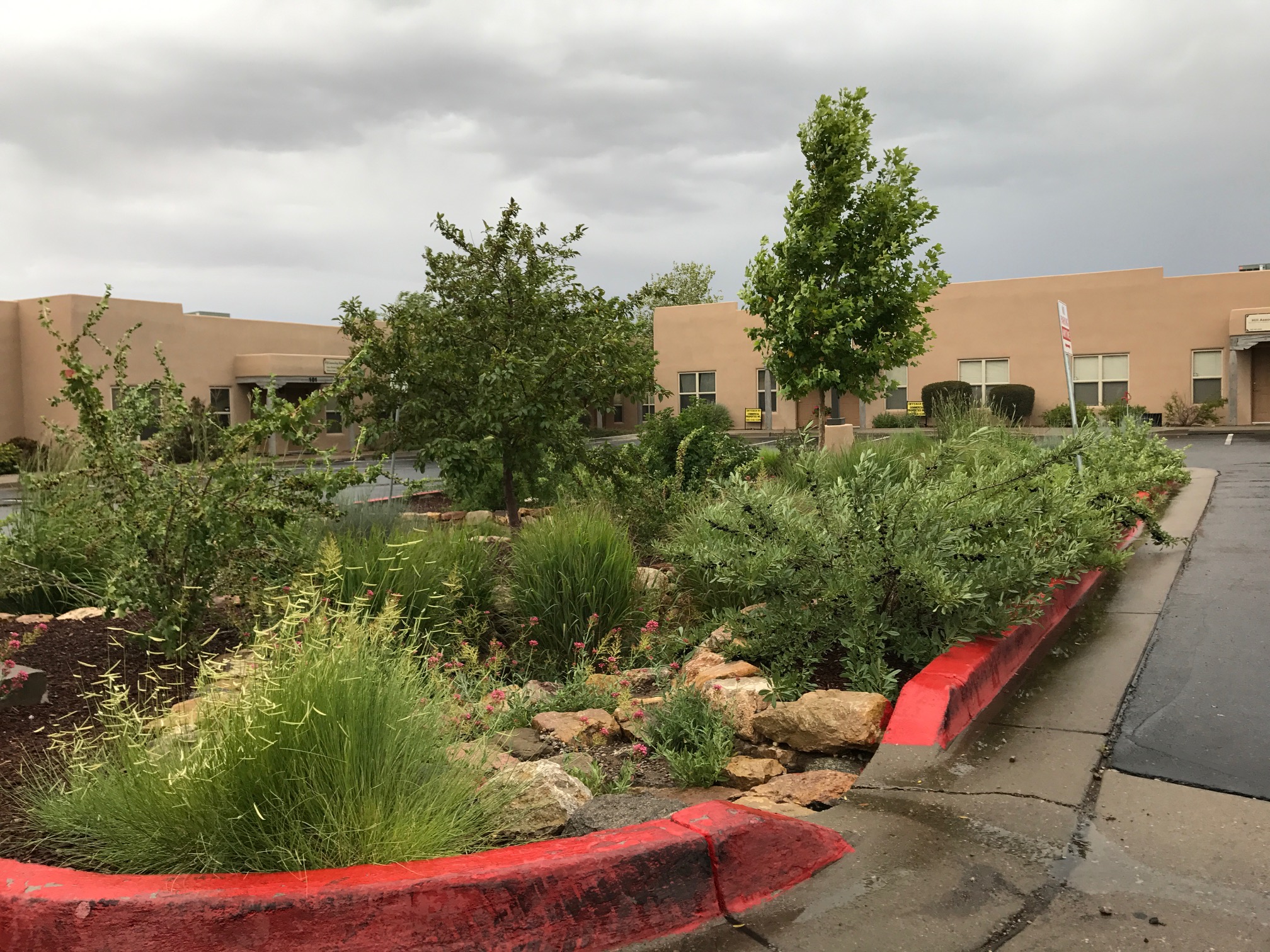
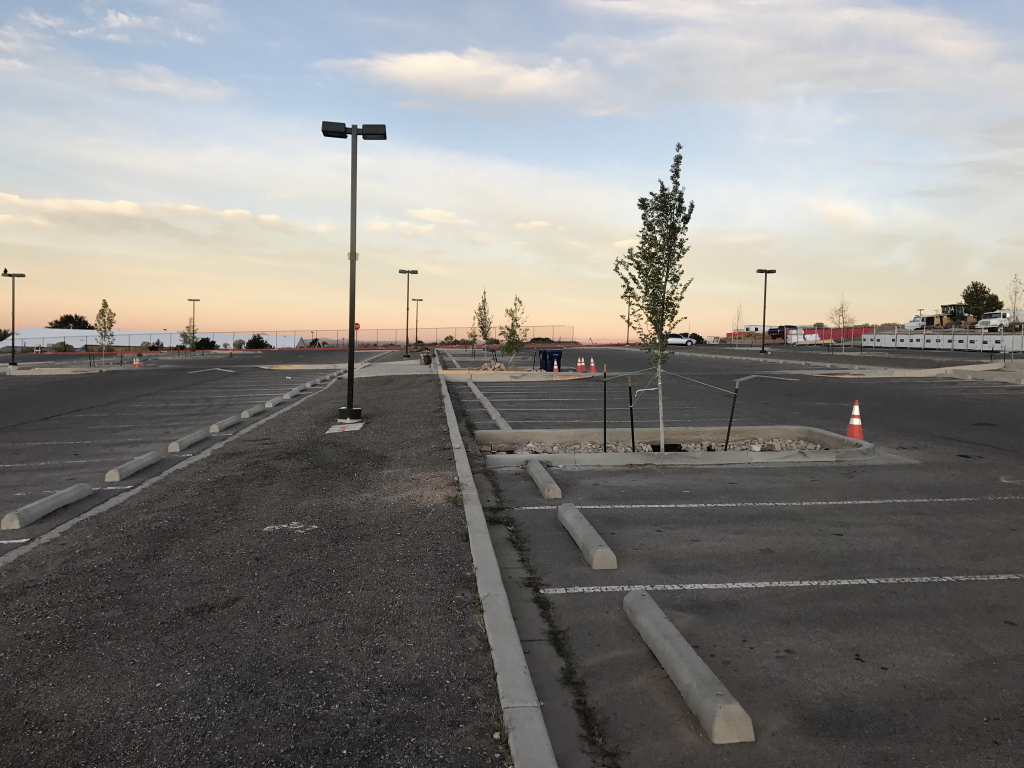
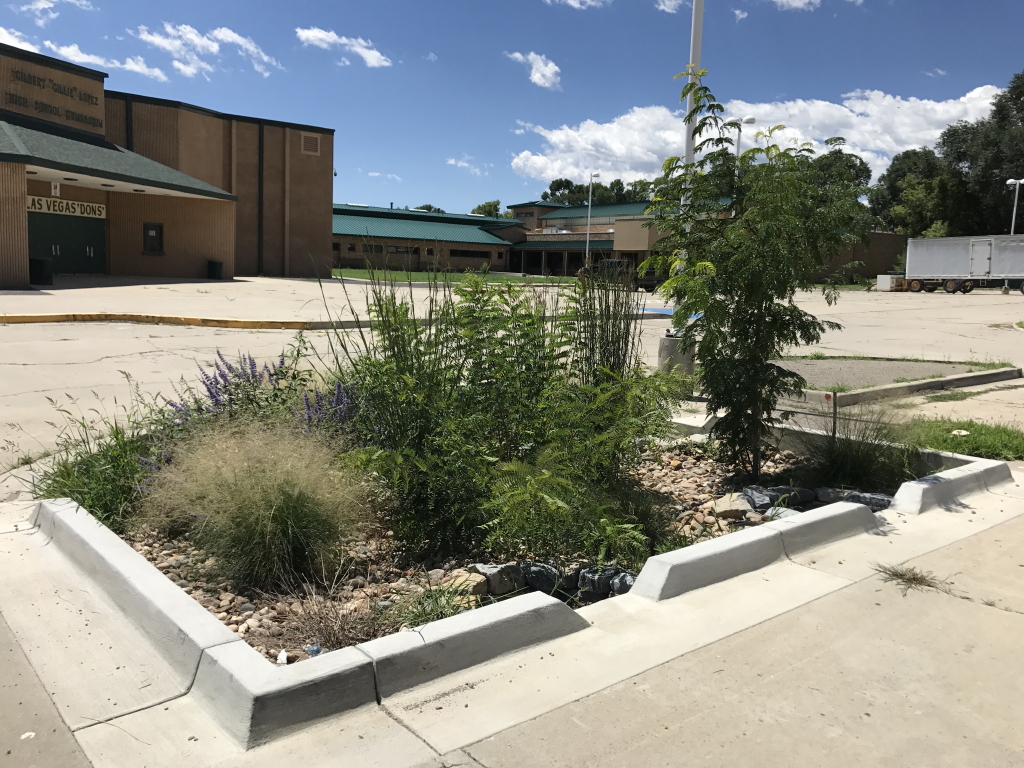
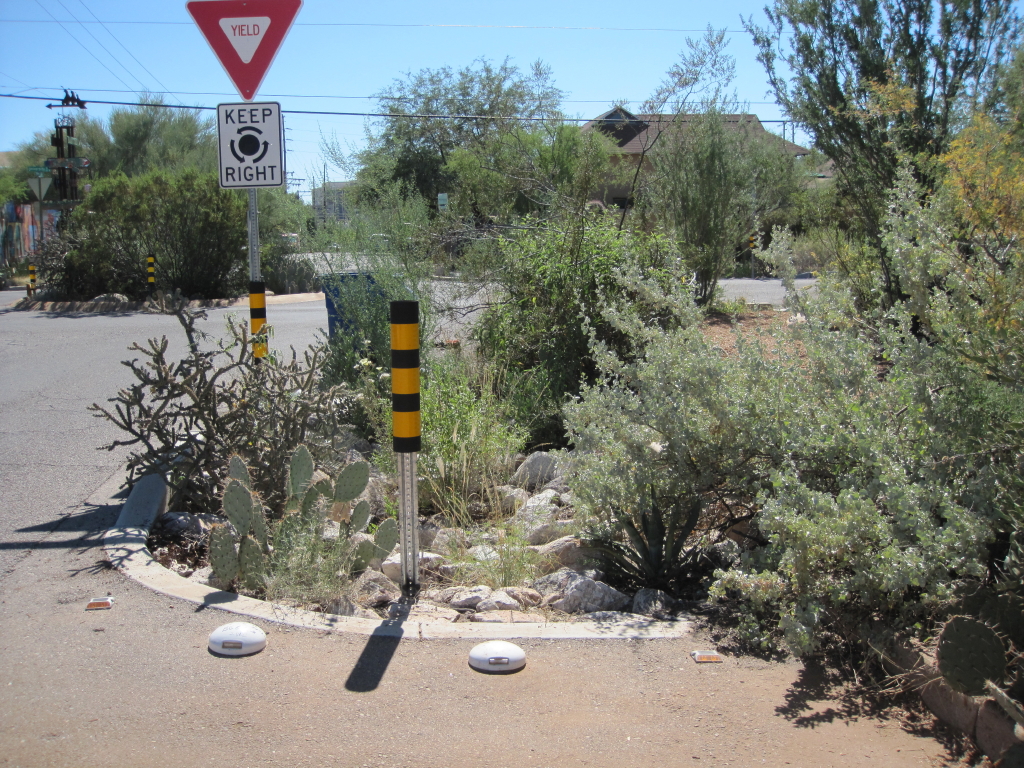
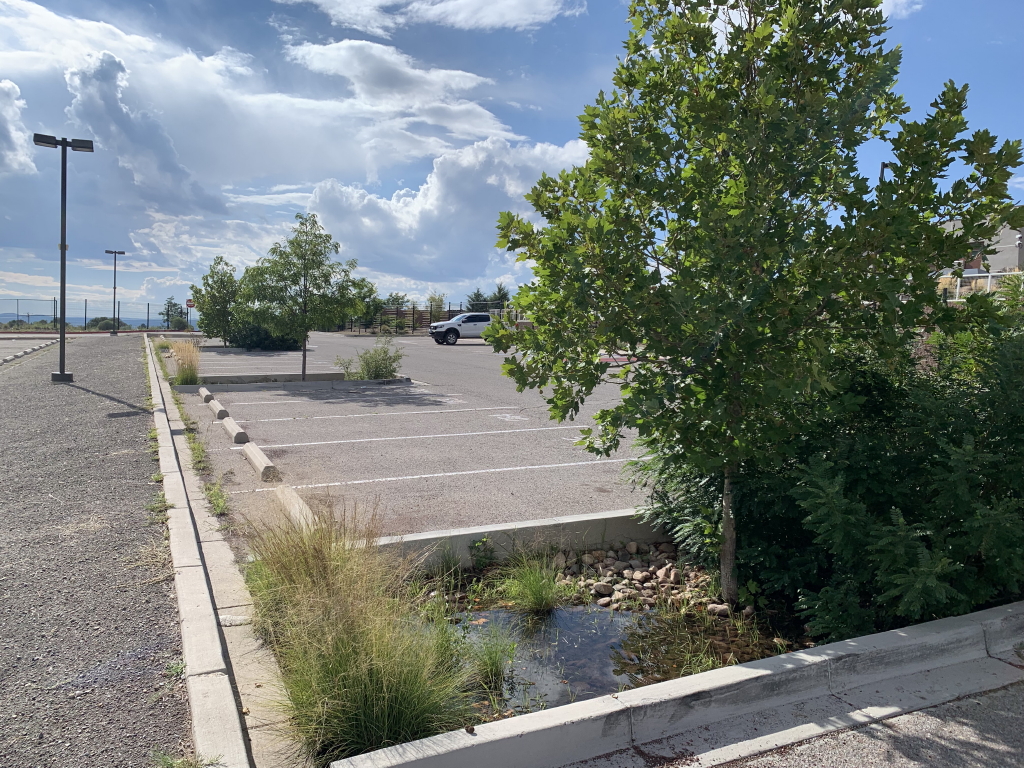
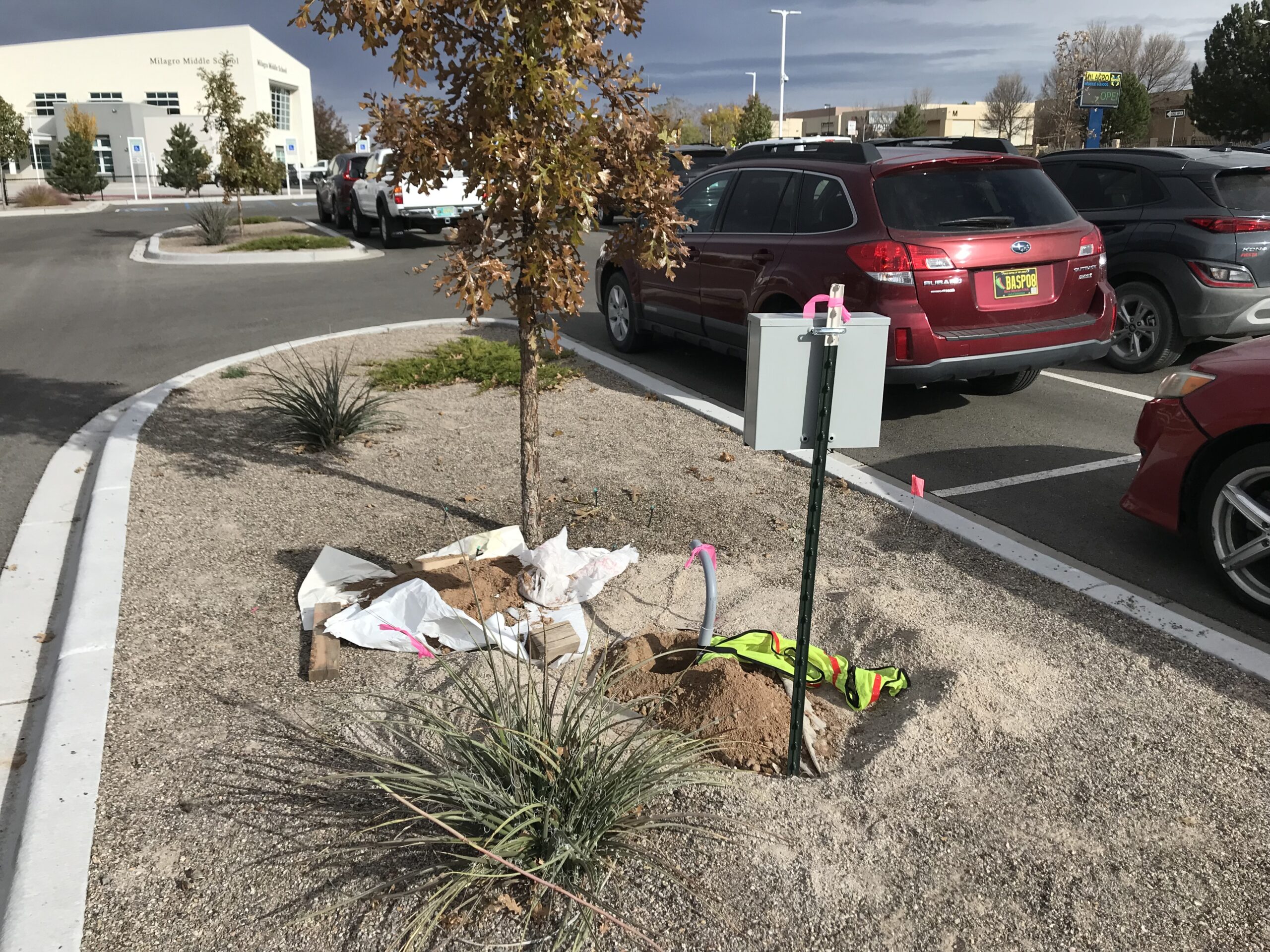
It could be argued that the United States does a better job of housing vehicles than people. While the occasional community event or a few particularly busy business hours might result in a parking lot being full, most of the time these asphalt deserts have vacant spaces that could be put to better use…such as tree cover. Parking spaces retrofitted as rain gardens are a simple, easily replicated system of improving urban tree canopy, remediating stormwater pollutants, and beautifying commercial or educational properties. More importantly, these green stormwater infrastructure features are proving to be excellent methods of sustaining urban trees and other plants in semiarid regions without drawing on limited water resources. If you would like to learn more, check out the following highlights with links below.
GSI Manual for Santa Fe County
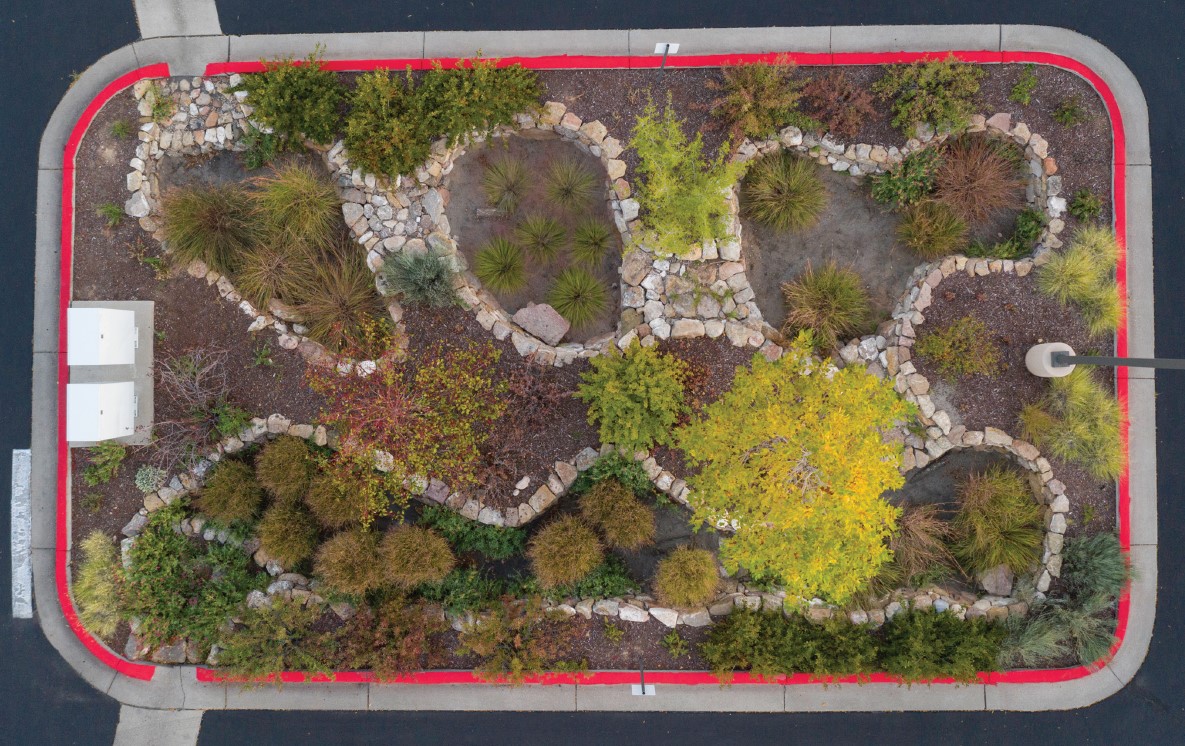
Southwest Urban Hydrology collaborated with Santa Fe County and the RainCatcher to develop a green stormwater infrastructure manual with regionally specific designs for rural and urban settings. The manual is intended to help guide the process of assessing sites for GSI, planning appropriate stormwater mitigation interventions, and reviewing existing installations for potential flaws or maintenance needs.
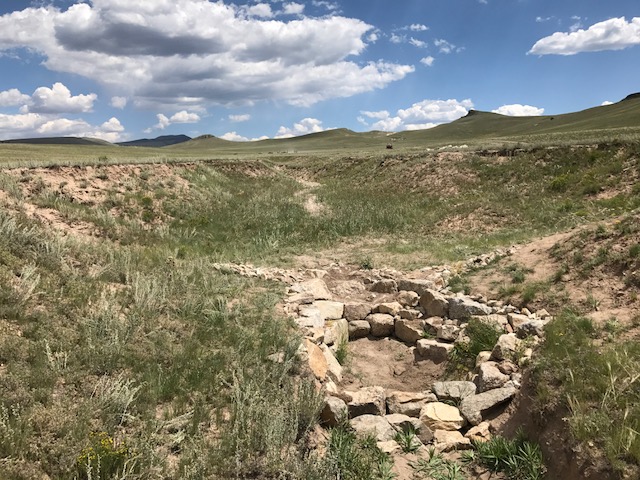
The guidebook includes GSI design components such estimating areas and volumes of runoff, plant lists, soil considerations, and the all important sediment trap. GSI features touch on upland BMPs (e.g., one-rock dams), bioswales, and parking space retrofits!
GSI Can Help Cool Heat Retaining Impervious Surfaces!!!
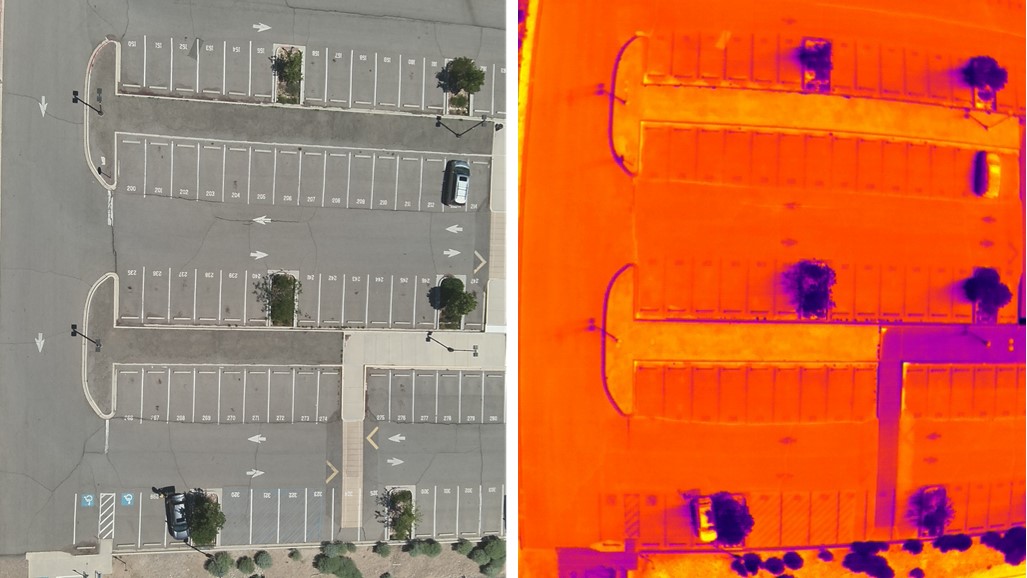
One of the benefits of storing moisture in soil is the cooling effect it has on surrounding areas. Increased soil moisture provides passive irrigation for vegetation that reduces temperatures through shade and transpiration. Higher moisture in the soil also cools surfaces down through basic evaporation out of the ground’s surface. Reducing infiltration by compacting soil surfaces, removing vegetation, installing fake turf, or paving over the area can be detrimental for many reasons including an increase in the urban heat island effect. If you want to learn more about the cooling benefits of GSI, check out this video.
There are abundant individuals, non-profits, businesses, and partnerships that are conducting critical work to address watershed education, restoration, and protection. A few that Southwest Urban Hydrology has had the pleasure of collaborating with and learning from include: